Contents
the email tool that makes email marketing simple


The Best Email Newsletter Platforms and Apps
Published: · Last updated: · By Marcus Biel
In brief
We compared the best email newsletter platforms on price, simplicity, and scalability — with free-plan limits and pricing verified in July 2026.

Short on time? For most small businesses in this comparison, Maildroppa is the most affordable option at every stage, MailerLite is a solid runner-up for simple newsletters, and Omnisend is the strongest pick for ecommerce stores. Below, we compare six popular email newsletter platforms on affordability, simplicity, and scalability — the three factors that matter most when you run your newsletter yourself. All prices and free-plan limits were checked on each provider's official pricing page on 21 July 2026. If you send very large volumes, our bulk email marketing software comparison digs deeper into high-volume sending.
What Is an Email Newsletter?
An email newsletter is a regularly scheduled email sent to a list of subscribers. They're a great way to share updates, industry news, or promotional offers. The goal is to establish a regular form of communication with your subscribers and keep them interested in your product.
What Should You Look for in an Email Newsletter Platform or App?
Before you can find the right newsletter app, you need to know exactly what you're looking for. What everyone wants or needs when it comes to sending newsletters can be different but we've chosen a few of the most important features.
Affordability
Perhaps the most important aspect of any product or service used by a business is how much it costs. The less money you spend on services for your business, the more profit you can make. Naturally, this always needs to be weighed against the effectiveness of the service. There's no point in going for the cheapest option if it doesn't work properly. However, affordability is especially important when you're first starting out and need to keep costs as low as possible. Email newsletter tools that offer free trials or discounts at the beginning will rank higher on this list as they save you money when you need it the most.
A good platform values transparency in its pricing. Ensure you understand what it means by "Free Trial" and "Free Plan". Free Trial usually means it's only free for a limited time – normally a month. Free Plan means you can use it as long as you like providing you don't go over a certain limitation, e.g., number of email contacts or number of emails sent.
Simplicity
A major factor when choosing the best newsletter platform is simplicity. If it's your first time sending a newsletter, you don't want to spend more time learning how a platform works than you do sending emails to your subscribers. The simpler and more intuitive the platform is, the better. After all, time is money – money that you could rather be investing into your business.
Scalability
When it comes to email marketing, scalability is directly linked to automation. In the beginning, you might be able to manually insert the names of each of your subscribers into your emails in a few minutes. Remember though, when you get to 10,000 people on your email list, this will take hours. That's why it's so important to choose an email platform that automates these tasks for you so that it can scale with your business.
What Features Should Newsletter Software Have?
Email marketing isn't merely for sending emails. It must help you market your business effectively and affordably. A good email newsletter tool helps you do things like track your campaign to see what's working and what isn't, create a killer landing page, make customized signup forms, and manage your email subscriber list effectively.
List management
One of the key features that any good newsletter software should have is the ability to manage your mailing list. As your subscriber count grows, you're going to want to segment them based on their behavior and demographics for more effective communication. The longer you have the list, the more inactive and unresponsive subscribers you're going to end up with. Because of this, the software that you choose needs to be effective at cleaning out unresponsive subscribers, re-engaging those who might still be interested, and adding new ones. The more automated these tasks are, like removing a subscriber after a certain number of email bounces, the less time you have to spend doing them yourself.
Email marketing analytics and tracking
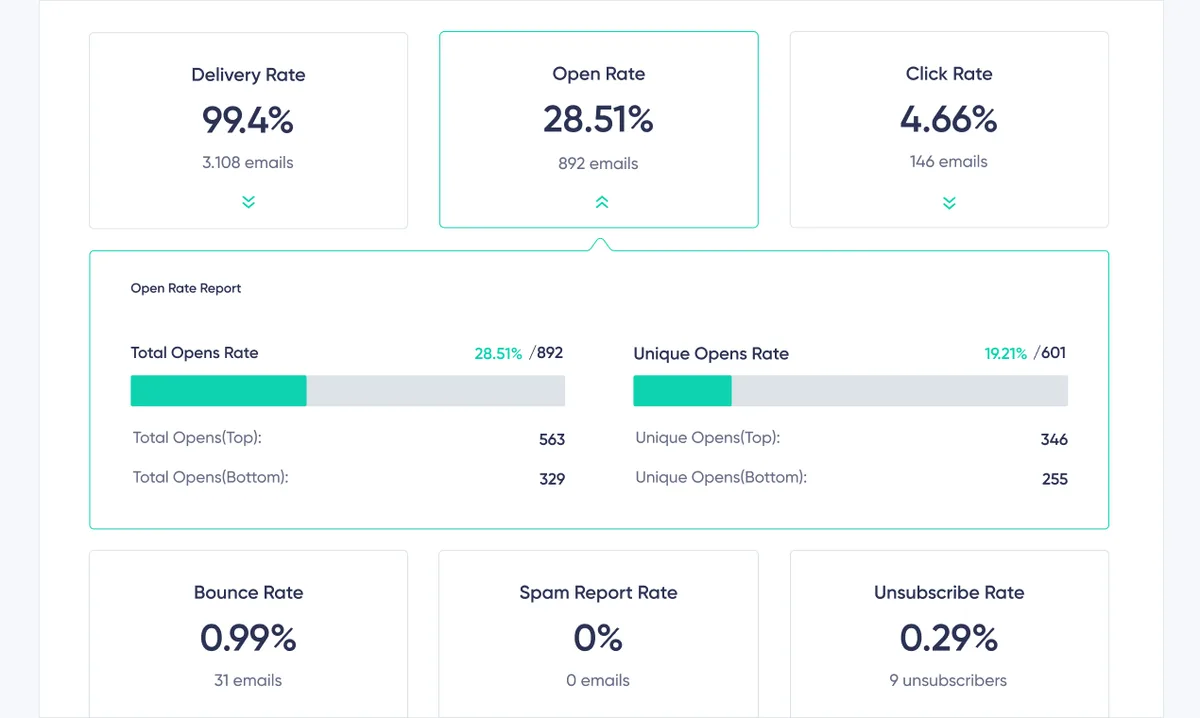
One of the easiest ways that you can improve a struggling email marketing campaign or newsletter is by looking at which areas you're under-performing in. It's necessary to track your campaigns to learn if they're successful or need tweaking. Any good email software will have a dashboard where you can easily view key performance indicators.
The easier to understand and more detailed these are, the better you can determine what exactly needs to be improved. You should be able to track things like open and click-through rates. A bonus is an A/B testing feature to really optimize your emails.
Email automation features
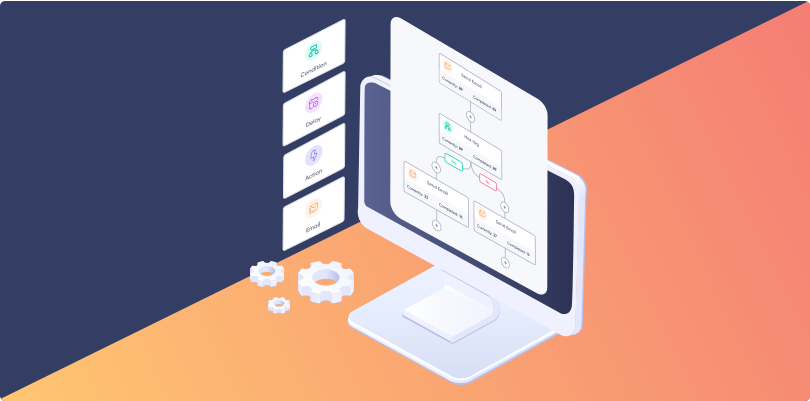
You need to be able to prepare your emails and then set the whole thing to autopilot. You shouldn't have to manually send emails every time a customer makes a purchase. You have more important business tasks to attend to. It's not worth spending on email software without automation features.
Automation becomes increasingly important as the size of your mailing list grows. Your email marketing needs to be able to scale with your business without using up too much of your time, and email automation makes sure that it can. Properly automated email software has a number of benefits. Perhaps the most important of them all is time-saving; email automation can reduce a task like sending out a personalized newsletter from hours to just a few minutes. You'll have more time to spend focusing on crafting engaging subject lines or improving your email content.
Segmentation attributes
You cannot use the same marketing blurb for all your customers. The platform you choose must allow you to segment customers based on demographics like their culture. interests, and preferences.
Templates
You need inbuilt email templates to help you launch your campaigns fast. With these, you simply choose a suitable template and edit its pre-existing content. This saves time in designing a letter from scratch and ensures a professional format.
How Much Do the Best Email Newsletter Platforms Cost?
| EMAIL NEWSLETTER SERVICE | CHEAPEST PAID PLAN | PRICE FOR A 1,000-SUBSCRIBER LIST | FREE PLAN |
|---|---|---|---|
| Maildroppa | Premium, from $5/month | $5/month | 100 subscribers, 2,500 emails/month, no time limit |
| MailerLite | Comfort, from $12/month | from $12/month | 250 subscribers, 2,500 emails/month |
| Mailchimp | Essentials, from $13/month (500 contacts) | rises with contact tier | 250 contacts, 500 emails/month |
| GetResponse | Starter, from ~€13/month (annual billing) | ~€13/month (annual billing) | none — 14-day trial |
| Omnisend | Standard, from $16/month (500 contacts) | ~$25/month | 250 contacts, 500 emails/month |
| Campaign Monitor | Lite, from $13/month (500 contacts) | rises with contact tier | none — 30-day trial (500 contacts) |
Prices and limits checked on each provider's official pricing page on 21 July 2026. Most providers price by list size and billing period, so use their pricing calculators for your exact list — the sources at the end of this article link directly to each pricing page.
Maildroppa
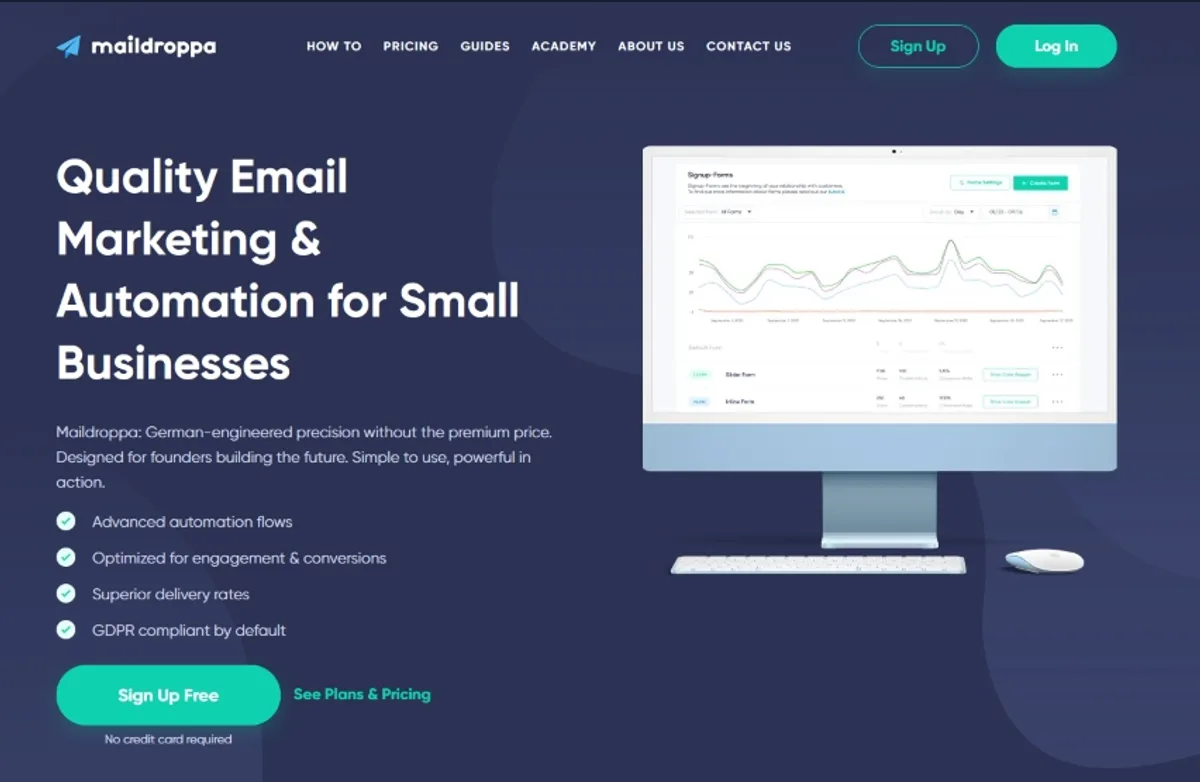
Maildroppa is an incredibly effective email marketing platform that was designed with two things in mind: simplicity and affordability. Signing up gets you access to the full suite of features completely free for your first 100 subscribers, for as long as you need. This means that you pay the least when you have the least to spend.
It also means that you can set up all of the more advanced features right from the beginning. You don't have to wait until you have a premium plan to set up your newsletter automation or advanced analytics. And, because the free plan runs forever, you can take as much time as you need. This makes scaling your email marketing easy. You can run your free newsletter for 100 subscribers just like you would a paid newsletter of 100,000.
Maildroppa is the most affordable option on this list, meaning that it's the perfect choice to start your newsletter and grow it into something highly effective.
Omnisend
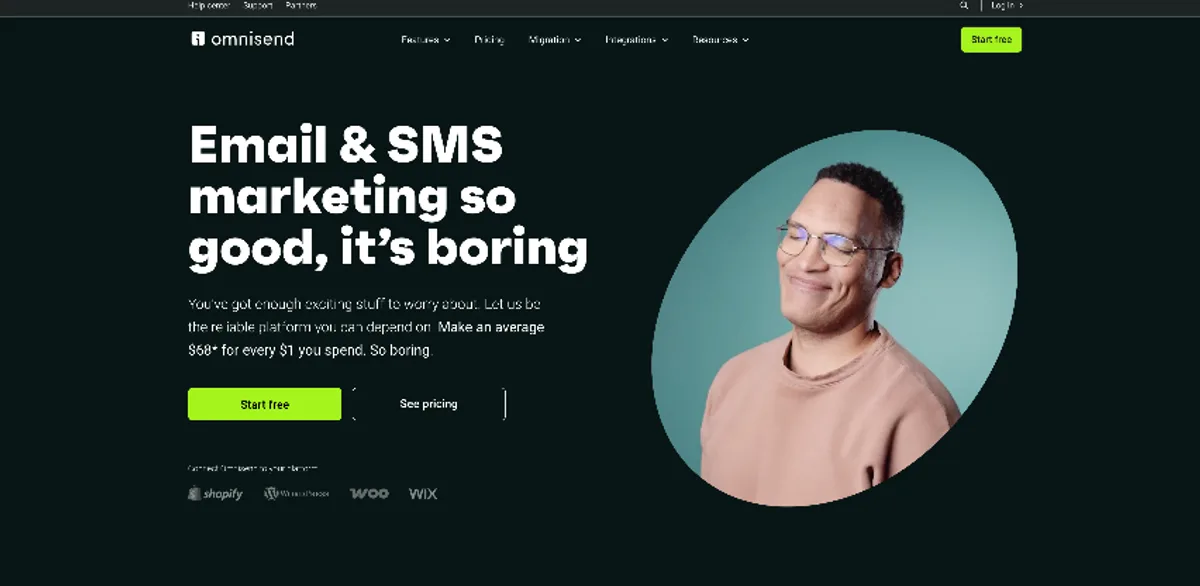
The free plan covers up to 250 contacts and 500 emails per month, including automation and A/B testing. The paid Standard plan starts at $16 per month for 500 contacts and lands at roughly $25 per month for a 1,000-contact list. Note that on new subscriptions since May 2026, SMS is reserved for the more expensive Pro plan. For small ecommerce businesses just starting out, Omnisend still offers a powerful toolkit with zero upfront cost.
MailerLite
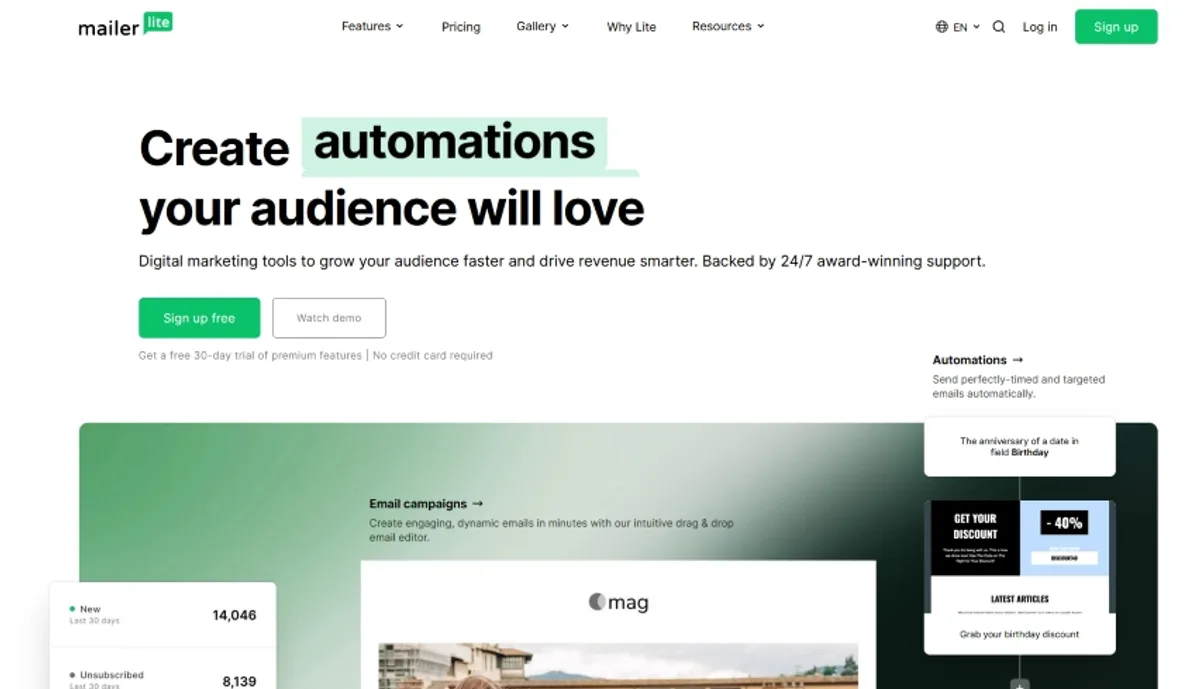
MailerLite is an email marketing SaaS made with simplicity in mind, and it remains one of the easier tools to learn. Be aware that its once-famous free plan has shrunk considerably: it now covers only 250 subscribers and 2,500 emails per month (down from 1,000 subscribers in earlier years), and paid plans were repriced upward in June 2026. The cheapest paid plan, Comfort, starts at $12 per month and includes a monthly sending ceiling of ten times your subscriber limit.
The simplicity also has a flip side: advanced automation and detailed reporting sit behind the paid plans, and the design options are less flexible than some alternatives. MailerLite is still a solid choice for a simple newsletter — but the free plan is now only enough for a very small list.
Campaign Monitor
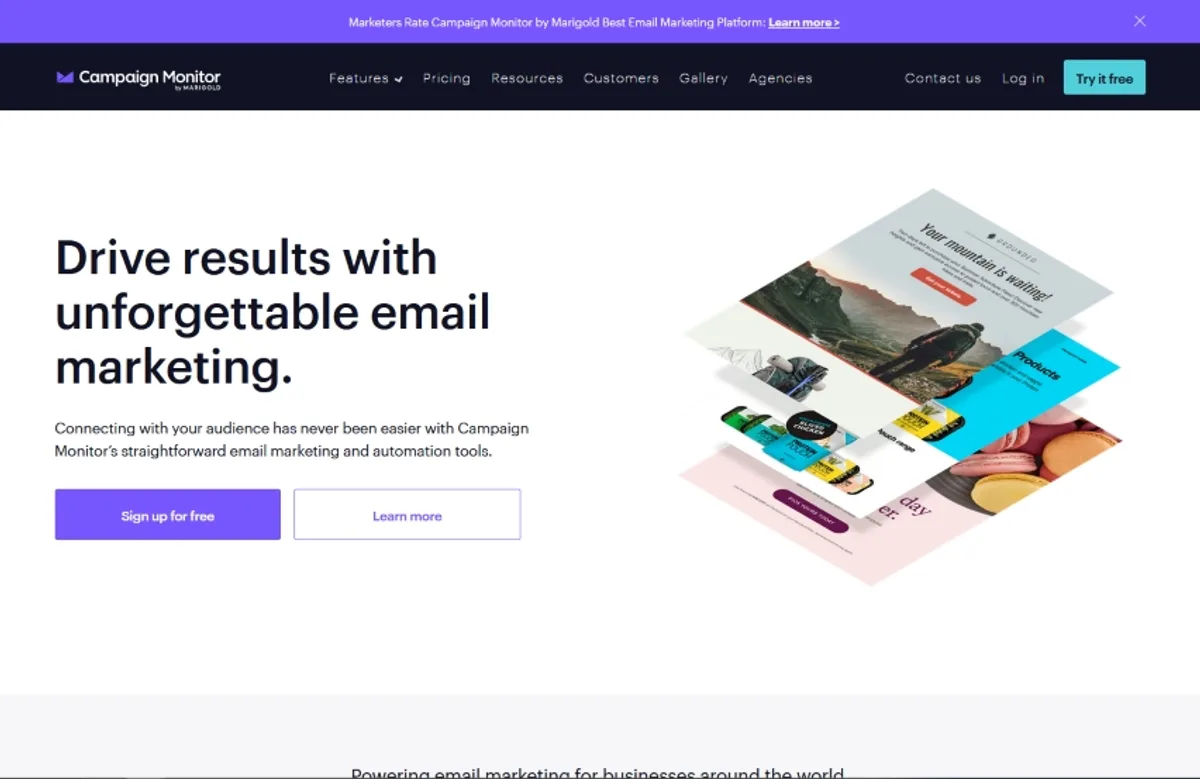
Campaign Monitor is a great email marketing tool for those looking to manage a newsletter for multiple clients. You can add as many different clients as you want to your profile, create custom templates, set up automations for each client, and lock specific sections of emails and templates to prevent editing.
However, this platform can be quite complicated compared to the others on this list. There is no real free plan — just a test sandbox for up to 5 subscribers and a 30-day trial capped at 500 contacts. Paid plans start at $13 per month for 500 contacts on the Lite plan, which also caps monthly sends at five times your contact count.
Campaign Monitor is a great option if you're a professional with a big budget managing multiple email campaigns, but it's probably not the best choice if you're doing a newsletter for your own small business.
GetResponse
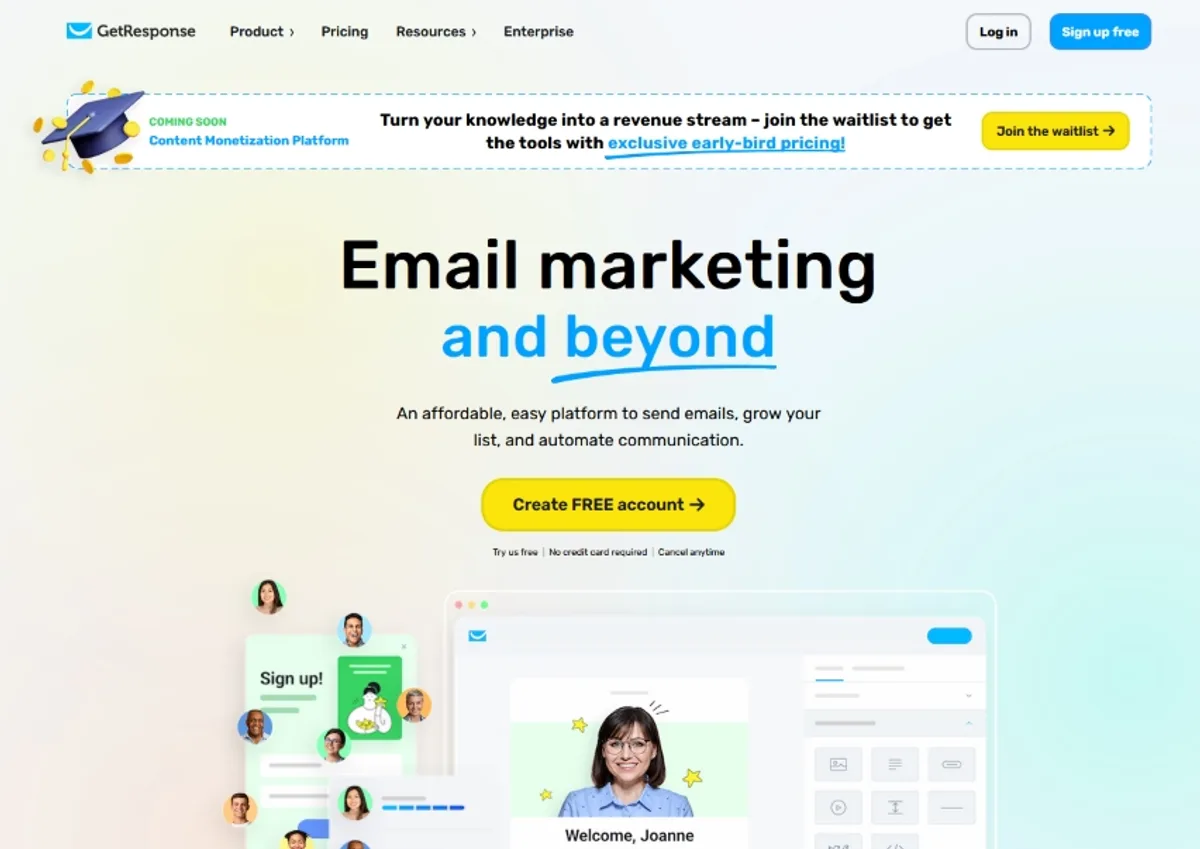
GetResponse is an email marketing service that stands out for some of its more advanced features. It has great webinar hosting and integration, as well as highly customizable automation workflows. This allows you to create an email marketing campaign that's linked to the rest of your marketing efforts.
There is no permanent free plan — only a 14-day trial. After that, the Starter plan begins at roughly €13 per month for 1,000 contacts with annual billing (paying monthly costs more). Paid plans include unlimited email sends, so GetResponse is worth considering if you send many emails per month and want advanced automation and webinars in one tool.
Mailchimp
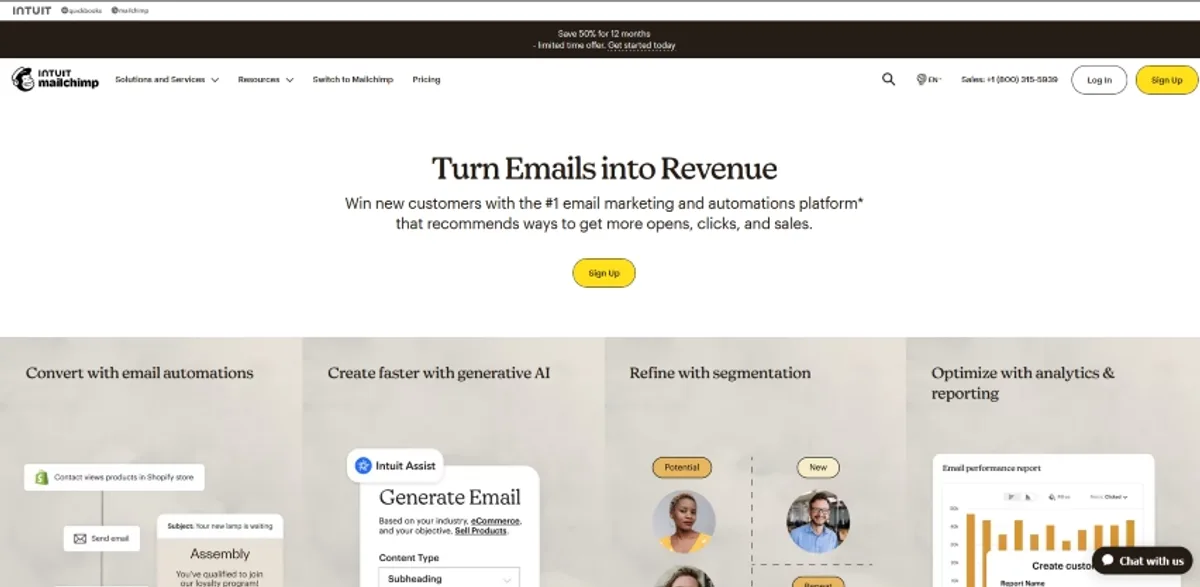
As the biggest of the email marketing tools, Mailchimp offers a known quantity. They have a large number of templates and automation options available. They're also very reliable and offer dedicated 24/7 support.
The main reason the platform comes in last on our list is what small senders get for the price. The free plan is now limited to 250 contacts and 500 emails per month (capped at 250 per day), with email support only for the first 30 days. Paid plans start at $13 per month for 500 contacts on Essentials, and because Mailchimp bills by contact tier, the price climbs quickly as your list grows — and introductory discounts expire after the first months. For a deeper head-to-head look at how Mailchimp compares with Maildroppa, see our Email Marketing Monkey comparison. If you're developing your email marketing long-term on a small budget, you're likely to find yourself looking for a more affordable option fairly quickly.
Newsletter Service Honorable Mentions
The following email marketing platforms are great choices in specific circumstances but they didn't quite make our top 5 list for one or more reasons.
- Shopify - easily integrated with your ecommerce
- Beehiiv - great for monetizing your newsletter
- Convertkit - offers a wide variety of automation features
- Flodesk - user-friendly with a wide variety of email templates
- Constant Contact - a solid all-rounder with good email list segmentation
Conclusion
The choice of newsletter platform is especially important when you're first creating a newsletter, as the email marketing software you start with will likely be the one that you stay with. Ultimately your goal should be to find a platform that's simple, affordable, scalable, and has all of the features that your specific business needs. We believe that platform is Maildroppa but it's up to you to decide what's best for your business.
Sources
- MailerLite Pricing
MailerLite
Free plan limits (250 subscribers, 2,500 emails/month) and Comfort plan entry price, checked 21 July 2026.
- Mailchimp Marketing Pricing
Mailchimp
Free plan limits (250 contacts, 500 emails/month) and Essentials entry price, checked 21 July 2026.
- GetResponse Pricing
GetResponse
Trial-only free option and Starter plan pricing for 1,000 contacts, checked 21 July 2026.
- Omnisend Pricing
Omnisend
Free plan limits (250 contacts, 500 emails/month) and Standard plan entry price, checked 21 July 2026.
- Campaign Monitor Pricing
Campaign Monitor
Lite plan entry price and 30-day trial conditions, checked 21 July 2026.
Continue reading
Use these related resources to apply the topic or explore the next decision.
- Use the CAN-SPAM compliance checklist
Apply the legal requirements for transparent commercial email and working opt-outs.
- Improve deliverability and lower bounce rates
Review the sending practices that protect sender reputation and keep campaigns out of spam.
- Plan a newsletter readers want to open
Connect audience, content, structure, and campaign goals before designing the email.
Ready to Send Better Emails?
Stop juggling bloated tools or overpriced plans. Maildroppa offers personal support, privacy-conscious controls, and powerful email marketing - starting free forever.
No credit card required. No time limit.